
Blog
A Professional Guide to Moving Artwork
Your artwork tells a story, whether it’s a family heirloom passed down through generations, an original piece you commissioned or a valuable investment you’ve carefully collected. When it’s time to move, the thought of these cherished pieces arriving in anything but pristine condition can feel overwhelming.
Professional art handlers and museums follow specific protocols because artwork is uniquely vulnerable to damage from improper packing, temperature shifts and handling mistakes. You can apply these same expert techniques to protect your collection during a residential move.
Assess and Prepare Your Collection
Before you pack and wrap artwork for moving, take time to properly assess your collection and gather materials. It’s important to understand what you’re working with and have the right supplies.
Document the Condition of Each Piece
Creating a condition report is standard practice for museums and professional fine art movers. This documentation provides a record for insurance claims, helps you track each piece and gives you peace of mind with proof of your artwork’s condition before moving.
Take high-resolution photos of each piece from multiple angles, capturing the front, back, frame edges and any existing damage or wear. Look for physical damage like cracks or tears, chemical damage such as discoloration or fading and biological damage like mold. Document anything that deviates from the piece’s original state. Physical damage might include a small tear in a canvas corner, chemical damage could appear as yellowing along edges and biological damage might show as small dark spots.
Gather the Right Archival-Grade Supplies
Choosing the right packing materials is crucial, as standard moving supplies can permanently damage your artwork. Regular newspaper, cardboard and tape contain acids that cause yellowing on art over time.
Archival-grade materials are acid-free and pH-neutral, meaning they won’t chemically react with your art. You’ll need acid-free tissue paper or glassine to create a protective barrier. Additionally, non-cross-linked closed-cell polyethylene foam provides cushioning without releasing harmful substances, ideal for wrapping delicate surfaces.
You’ll also need Bubble Wrap, sturdy boxes, corner protectors and low-tack tape.
How to Pack Art for Moving
Once you’ve documented your collection and gathered supplies, you’re ready to pack. Follow these specific techniques for each artwork type.
Packing Framed Works
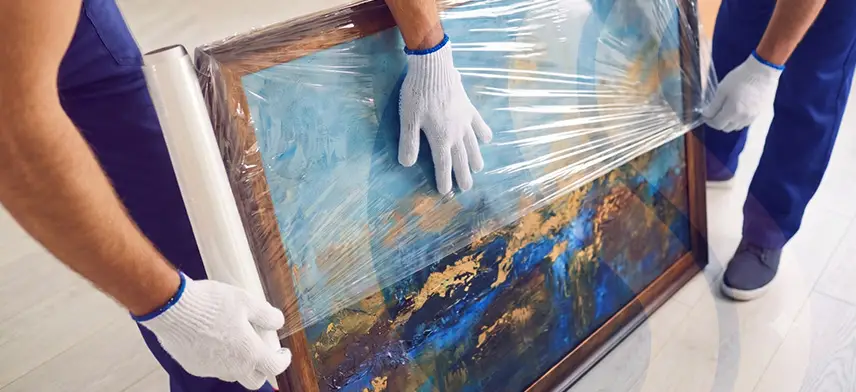
Framed paintings and prints require careful layering to protect both glass and artwork. Understanding how to pack paintings for moving prevents common damage during transit. Follow these proven packaging guidelines from art professionals to ensure you’re using vetted techniques:
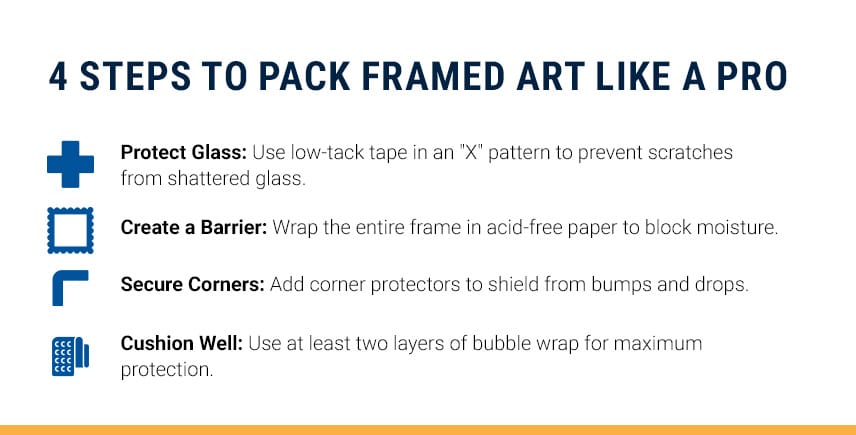
- Protect the glass first: Place low-tack painter’s tape in a large X pattern across the glass. This X holds shattered pieces together if the glass breaks, protecting the artwork from scratches.
- Wrap the frame in a protective barrier: Wrap the entire frame completely in archival-quality, acid-free paper. This barrier prevents moisture and chemicals from reaching the art or frame. Never use plastic wrap directly on artwork.
- Add corner protectors: Slide cardboard or foam corner protectors onto all four corners. Corners are the most vulnerable to damage from bumps and drops.
- Cushion with Bubble Wrap: Wrap the artwork in at least two layers of Bubble Wrap, with bubbles facing outward to prevent impressions on your frame. Secure with packing tape without letting the tape touch the frame.
- Box the artwork correctly: Slide the wrapped artwork into a picture box slightly larger than the piece. Fill extra space with Bubble Wrap or packing paper to prevent shifting. When packing fragile items for moves, proper cushioning is essential.
- Seal and label clearly: Tape the box shut on all seams. Label with “fragile” and arrows indicating which way is up.
Packing Unframed Canvases
Unframed canvases face vulnerabilities, including punctures and surface damage. The best way to pack unframed paintings for moving is to create protective layers and rigid support, using the following techniques:
- Wrap the canvas in acid-free paper: Lay acid-free paper on a clean surface, place the canvas face down and fold the paper around it. Tape the paper to itself, ensuring no tape contacts the canvas.
- Create a rigid sandwich: Cut two pieces of foam board or thick cardboard a few inches larger than the canvas. Place the wrapped canvas on one sheet, then place the other on top. Tape the boards together securely.
- Place in a protective box: Select a box slightly larger than your sandwich. Fill the space with Bubble Wrap or packing peanuts to prevent movement.
Packing Sculptures and 3D Objects
Three-dimensional artwork requires double boxing, which creates a buffer zone that absorbs shocks during transit. Follow these steps for packing your sculptures and 3D objects:
- Assess the object carefully: Examine the sculpture and identify fragile areas, like thin appendages, and its strongest point, usually the base.
- Wrap the surface gently: Wrap the sculpture in acid-free tissue paper or soft cloth. For complex shapes, tuck material into crevices for complete protection.
- Prepare the inner box: Select a box a few inches larger than the sculpture. Line the bottom with at least 2 inches of cushioning.
- Float the sculpture: Place the wrapped sculpture in the center on top of cushioning. Fill all surrounding space, including the top, with packing material. The object should be completely immobilized.
- Seal the inner box: Tape it securely shut.
- Prepare the outer box: Select a box at least 2 to 3 inches bigger than the inner box on all sides. Line the bottom with cushioning.
- Create the buffer zone: Place the sealed inner box in the center. Fill the gap on all sides with packing material to absorb shock from impacts.
- Seal and label thoroughly: Tape the box shut and mark as “fragile” and “handle with care” with arrows indicating up.
Best Practices for Transporting and Unpacking Artwork
Proper packing protects your artwork, but safe transport and careful unpacking are equally important. Knowing how to transport paintings correctly ensures your preparation pays off.
Loading and Securing Art for Transit
How you load packed artwork in a moving vehicle significantly impacts safety during transport.
Canvases and framed works should be transported vertically, standing on their edge rather than lying flat. Placing them vertically distributes weight properly and prevents pressure damage. Using straps or braces, secure these pieces so they cannot shift or fall during transit.
For sculptures, always transport them upright, resting on their base, as sculptures are designed to support their own weight when upright. The double-boxing method creates cushioning designed for this orientation. Transporting them on their side increases the risk of cracks or breaks.
Unpacking and Final Inspection
When you’re ready to unpack, work carefully, remove each piece and unwrap slowly, checking for damage. Compare the condition to the photos and notes you created before the move. If you notice damage, document it immediately with photos before removing packing materials. This documentation is essential for insurance claims.
For Complete Peace of Mind, Trust Suddath
While this guide provides professional techniques for moving artwork safely, some situations call for expert handling from the start. Trained handlers understand the risks of vibration, climate changes and handling errors that even careful DIY moves can’t always account for.
Consider hiring professional art movers if you’re relocating a high-value collection or moving large or heavy pieces that require specialized equipment. International moves introduce additional complexity with customs regulations and climate variations that specialists can effectively navigate. When choosing art movers near you for your relocation, vetting moving companies for unique items ensures you select qualified professionals.
Founded in 1919, Suddath offers competitively priced white-glove services specifically designed for valuable items. Our specialists provide custom crating and expert handling, whether for local moves across town, long-distance residential relocations or international moves around the globe.
Get in touch today for a free estimate and discuss your artwork moving needs.