
Blog
Moving Your Houseplants
Your houseplants aren’t just decor — they’re living companions that have grown alongside you. The thought of moving them can feel overwhelming. Will they survive the journey? How do you keep them safe in transit? Whether you’re relocating across town or across the country, your plants need a thoughtful plan to thrive in their new home.
This guide walks you through every step of moving your houseplants safely, from preparation weeks in advance to settling them into their new space. With the right approach, you can give your green friends the care they need during this transition.
Three Weeks Before Your Move
Moving involves dozens of details, and having a solid moving plan makes all the difference. A little preparation goes a long way when moving plants — starting three weeks before your move date gives your plants time to adjust to any changes and helps you address potential problems before they become emergencies.
1. Assess Which Plants to Move
Some plants are natural adventurers, able to endure environmental changes with relative ease. Succulents like snake plants and aloe, along with hardy spider plants and Pothos, often handle moves surprisingly well due to their resilience and adaptability. They require less frequent watering and can tolerate varied light conditions, making them ideal candidates for relocation.
That said, not every plant is suited for the stress of relocation. Consider the following:
- Size and maturity: While some can thrive if moved with special care or professional handling, many large or mature plants can be challenging to move and may not survive the journey. Consider gifting oversized plants to friends or taking cuttings to start fresh in your new home. This lets you keep the plant’s legacy without the headache of transporting a 6-foot fiddle leaf fig.
- Overall health: Take inventory of your collection and evaluate each plant’s health and size. Check for signs of pests or disease — moving day isn’t the time to discover an infestation. Address any issues now to prevent them from spreading to other plants during transport. A plant that is already sick or stressed is also a prime candidate to leave behind. Moving can exacerbate existing issues, and the stress might prove fatal.
- Environmental needs: Any plant with specific climate or environmental needs that can’t be met during transit should be left behind. Certain plants are more delicate and may struggle with the upheaval of a move. Ferns, gardenias and orchids, for instance, are highly sensitive to changes in humidity, temperature and light, making them poor travelers.
It can be incredibly hard to say goodbye to a plant you’ve nurtured and grown with. As much as we get emotionally attached to our green companions, sometimes the kindest decision is to rehome a plant rather than subject it to a journey it’s unlikely to survive. If a plant is very large, exceptionally fragile, or requires precise conditions, finding it a new home with a friend or a local plant enthusiast might be the best option. You could also take cuttings from beloved plants to start fresh in your new home, keeping their legacy alive.
2. Understand State-to-State Regulations
Some states have strict rules to prevent the spread of pests and plant diseases across borders. While most common houseplants travel freely, it’s essential to verify the requirements for your destination state before packing a single pot.
Check the regulations by following these steps:
- Research your destination state: Visit the state regulation database to find specific requirements for where you’re moving.
- Identify restricted species: States like California, Arizona and Florida have particularly strict regulations due to their agricultural industries.
- Obtain necessary permits: Some plants may require inspection certificates or permits before crossing state lines.
- Plan alternatives: If a plant can’t make the journey legally, consider propagating cuttings if permitted or rehoming it locally.
3. Prune and Repot Into Lighter Pots
Trimming away dead leaves and overgrown branches makes your plants more compact and easier to pack. Pruning also reduces stress on the plant during transit by eliminating weak growth that’s likely to break on its own.
Repotting from heavy ceramic or terracotta pots into lightweight plastic containers is one of the smartest moves you can make. Plastic pots are more shatter-resistant, significantly lighter and far easier to secure during transport. Repotting two to three weeks before moving gives plants time to adjust to their new containers and reduces the risk of transport shock. Water plants lightly after repotting and avoid fertilizing until after the move.
The Week of Your Move
When you pack plants for moving, having the right materials and a systematic approach makes all the difference. Proper packing protects both the pot and the foliage during what can be a bumpy journey.
1. Gather the Right Packing Supplies
Collect everything you need before you start packing to avoid last-minute scrambles:
- Cardboard boxes: Various sizes to accommodate different plant heights
- Bubble packaging: For cushioning pots and delicate containers
- Breathable craft paper: To wrap around foliage and fill empty spaces
- Plastic sheeting or bags: To cover soil and prevent spills
- Packing tape: To secure boxes and wrapping materials
- Scissors and markers: For cutting materials and labeling boxes
2. Pack Small, Medium and Large Plants
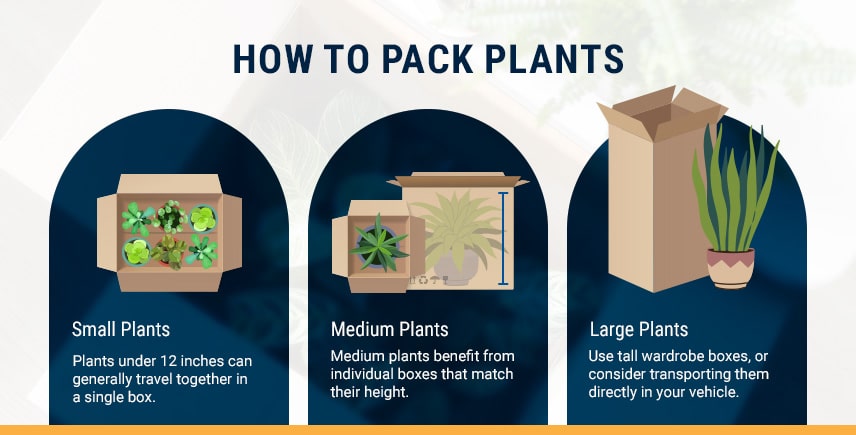
Small plants under 12 inches can generally travel together in a single box. Place each small pot in the box, using crumpled paper to fill gaps and prevent shifting. Keep the box upright and clearly mark the top.
Medium plants benefit from individual boxes that match their height. Center the plant in the box and add crumpled paper around the base for stability. For taller specimens, cut openings in the box flaps to accommodate stems while keeping the container secure. The same principles for packing fragile items apply to your plants.
Large plants require special attention. Use tall wardrobe boxes when possible, or consider transporting them directly in your vehicle without boxing them. Wrap the base carefully, and use soft ties to gently gather sprawling branches.
3. Secure the Pot and Protect the Leaves
Place a piece of cardboard or plastic sheeting over the soil surface and tape it securely to the pot rim. This taping method prevents soil from spilling during transport and keeps moisture where it belongs. Water plants lightly a day or two before moving so the soil is slightly damp but not saturated.
Gently wrap foliage with packing paper or a light cotton sheet to protect leaves and stems from breaking. Avoid wrapping too tightly — air circulation helps prevent mold and mildew. Secure the wrapping with tape that won’t damage the plant when removed.
On Moving Day
Transporting plants during a move comes down to controlling the environment and minimizing stress. Moving day is the culmination of your preparation, and these final steps help ensure your plants arrive in good condition.
1. Use Your Personal Vehicle If Possible
Most professional moving trucks aren’t temperature-controlled, and extreme heat or cold can kill sensitive plants in just a few hours. Moving companies also typically won’t insure plants due to their living nature and unpredictable needs during transport.
Your personal vehicle offers climate control, gentle handling and the ability to monitor your plants throughout the journey. This is the best way to move plants across the country because you maintain complete control over temperature, light exposure and transit duration. While professional movers handle your furniture and boxes, your plants ride safely with you.
2. Arrange Plants Securely in Your Car
Place boxes on the floor behind the front seats or on the rear seats where they won’t tip over. The floor provides the most stable surface and protects plants from direct sunlight through windows. Wedge boxes with towels or soft bags to prevent sliding during turns or sudden stops.
Secure taller plants that can’t be boxed by placing them in footwells or using seatbelts to hold pots steady. Position plants so they won’t fall forward if you brake suddenly. Keep the most delicate or valuable plants within easy view so you can monitor them during the drive.
3. Maintain Temperature and Light During Transit
Keep the interior temperature steady throughout the drive. Avoid extreme temperature swings by running your air conditioning or heat as needed.
Don’t leave plants in a parked car for extended periods, especially in summer or winter. Even a few hours in a hot or cold vehicle can cause irreversible damage. If you must stop, crack windows slightly for airflow on mild days or bring smaller plants inside with you.
Maintaining appropriate conditions becomes especially critical during a long-distance move that might span several days. Plan your route with overnight accommodations that allow you to bring plants inside.
Caring for Your Houseplants After the Move
Once you’ve arrived at your new home, your plants will need some special attention to settle in and thrive after their journey. Unpacking them thoughtfully and helping them reacclimate will help prevent post-move shock. Follow these tips:
- Unpacking your plants: Unpack them immediately upon arrival. Remove them from their boxes and unwrap any protective coverings. Inspect each plant for damage, broken branches or pest issues that might have arisen during transit.
- Finding their new home: Place your plants in locations similar to their previous environment in terms of light, temperature and humidity. Avoid direct, harsh sunlight immediately, especially if they’ve been in darkness. Gradually introduce them to brighter spots over a few days.
- Watering and feeding: Check the soil moisture of each plant. Water the soil if it feels dry, but avoid over-watering, which can lead to root rot. Refrain from fertilizing for at least a few weeks after the move. Your plants need time to recover from the stress of relocation before they can efficiently absorb nutrients.
- Monitoring for shock: It’s common for plants to show signs of stress after a move, such as yellowing leaves, drooping or leaf drop. This “transplant shock” is usually temporary. Continue to monitor your plants closely, providing consistent care and avoid making too many changes at once. With patience, most plants will recover and adapt to their new surroundings.
Frequently Asked Questions
Moving your plants can spark a ton of questions. We’ve got answers to help make sure your houseplants have a smooth move.
How Do I Transport Hanging or Trailing Plants?
For hanging plants, carefully untangle long vines and loop them gently into the pot or around a support stake. Wrap the entire plant loosely in breathable paper to prevent breakage. For trailing plants, place the pot in a box and let the foliage cascade over the sides, supporting it with additional packing material if needed.
What If My Plant Is Top-Heavy or Awkwardly Shaped?
For top-heavy or oddly shaped plants, use a sturdy, slightly larger box and fill any empty spaces with crumpled newspaper or packing peanuts to stabilize the pot. You can also stake the plant within the pot for added support. For very large plants, consider transporting them unboxed in your personal vehicle, using seatbelts or footwells to secure them.
How Can I Move Thorny, Spiky or Carnivorous Plants Safely?
Protect yourself and your plants by wrapping thorny or spiky plants, such as cacti, in layers of newspaper or cardboard before handling. For carnivorous plants like Venus flytraps, ensure their soil remains moist and avoid jostling them too much. Consider placing these delicate plants in their own designated box away from other items.
Should I Prune My Plants Before Moving Them?
Yes, pruning a few weeks before your move is generally beneficial. It reduces the plant’s overall size, making it easier to pack and transport. Pruning also removes weak or damaged growth, minimizing stress on the plant during the move and helping it focus energy on recovery.
How Do I Minimize Shock When Relocating Plants?
Minimize shock by ensuring consistent watering — without over-watering — before and during the move, maintaining stable temperatures in transit and providing adequate light. After arrival, gradually introduce plants to their new environment. Avoid immediate repotting or fertilizing, as this can add more stress.
Should I Ship My Plants?
Shipping plants can be risky due to unpredictable temperatures, handling and transit times. While some plants can tolerate shipping, it’s generally best to transport them in your personal vehicle, especially for sensitive or valuable specimens. If you must ship, research reputable plant shipping services and ensure proper packaging for climate control.
Let Suddath Handle the Heavy Lifting
You’ve just given your plants the personalized attention they need for a safe, stress-free journey. While you focus on their care, let Suddath take the worry out of everything else. As one of the largest United Van Lines and Atlas agents, we handle 72,000+ household moves annually with a global footprint that ensures reliable service from fully vetted moving crews and drivers wherever you’re headed.
Our specialists provide white-glove packing services that ensure every item is secure, and our specialty moving services protect your most valued possessions. With over 100 years of experience, our supportive team knows how to handle your belongings — from boxes of books to priceless antiques — with the same level of care you’ve shown your plants. Get your free estimate and enjoy the peace of mind that comes with the Suddath difference.